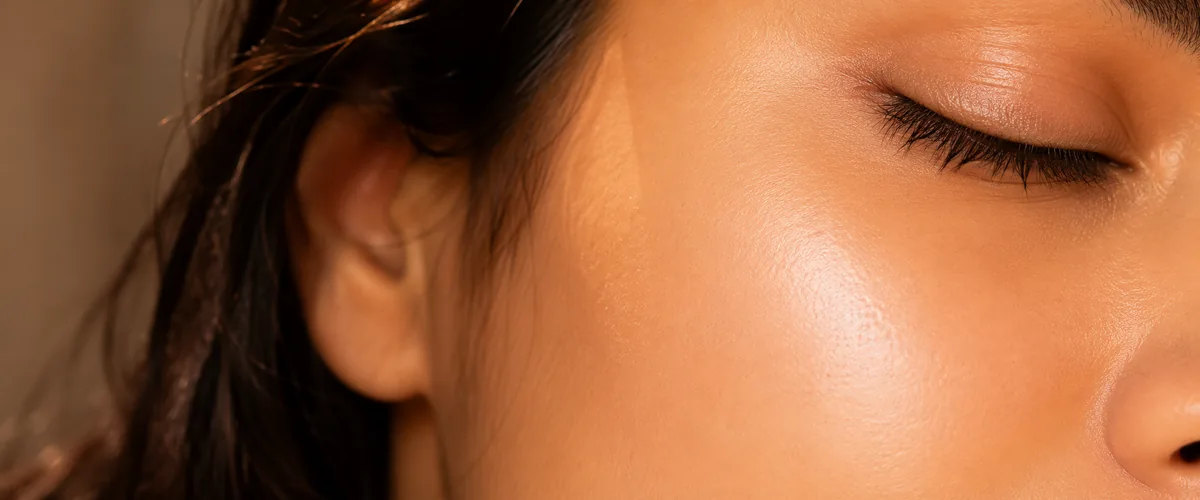
Internal Homeopathy + External Peels — A Dual Approach
Pigmentation and melasma are among the most common and most frustrating skin concerns — creams work while applied, but the underlying hormonal and inflammatory drivers keep producing melanin. Dr. Meenakshi's unique approach combines constitutional homoeopathic treatment addressing the internal root with medicated skin peels targeting the existing pigmentation externally.
Symmetrical brown patches on face — cheeks, upper lip, forehead — strongly linked to hormonal and sun exposure triggers.
Post-Inflammatory Hyperpigmentation
Dark marks remaining after acne, eczema, or injury — very common in Indian skin types III-V.
Sun Damage & Sunspots
Discrete dark spots from chronic sun exposure — face, hands, and forearms most commonly affected.
Periorbital Darkening
Dark circles with pigmentation component — distinguished from vascular and structural dark circles.
Uneven Skin Tone
Diffuse dullness and uneven colouring without discrete patches — constitutional and lifestyle factors.
Hormonal Pigmentation
Pigmentation worsening with PCOS, pregnancy, oral contraceptives, or thyroid dysfunction — requires internal treatment.
Why Pigmentation Keeps Coming Back
The fundamental reason topical treatments fail to produce lasting results is that they address the melanin already deposited — not the triggers continuing to stimulate melanocytes to produce more. Melanocyte activity is regulated by oestrogen, progesterone, UV exposure, inflammation, and constitutional skin sensitivity. Without addressing these drivers, any surface treatment is temporary.
Dr. Meenakshi's integrated approach works at two levels simultaneously: constitutional homoeopathic treatment to reduce the hormonal and inflammatory drivers of excess melanin production, and medicated chemical peels to address existing pigmentation. This combination produces more lasting results than either approach alone.
Dr. Meenakshi holds Aesthetic Diplomas from IICTN Pvt. Ltd. in Advance Skin Aesthetics & Laser and Cosmetology, in addition to her homoeopathic qualifications. This allows a genuinely integrated approach:
Constitutional Homoeopathic Treatment: Selected based on the complete case — the pattern of pigmentation, the hormonal history, the skin type, associated conditions (PCOS, thyroid), and the patient's overall constitution. This progressively reduces the internal drivers of excess melanin production.
Medicated Chemical Peels: Superficial to medium-depth peels using glycolic acid, salicylic acid, lactic acid, or TCA — selected based on skin type and pigmentation depth. These accelerate removal of existing pigment while the constitutional treatment prevents new formation.
Melasma — particularly hormonal melasma in women
Post-acne dark marks and PIH
Uneven skin tone and diffuse dullness
Pigmentation worsening with PCOS or thyroid
Sun damage and sunspots
Dark marks from old eczema or skin injuries
Pregnancy-related pigmentation (chloasma)
Pigmentation resistant to topical creams alone
Frequently Asked Questions
How many peel sessions are needed?
+
For most pigmentation cases, 4-6 sessions spaced 2-3 weeks apart produce optimal results. The number depends on the depth and type of pigmentation, skin sensitivity, and how aggressively treatment is tolerated. Dr. Meenakshi plans the series after a skin assessment.
Is peel treatment safe for Indian skin tones?
+
Yes — when correctly performed with appropriate peel selection for the patient's Fitzpatrick skin type. Indian skin (types III-V) requires careful selection to avoid post-peel hyperpigmentation — a risk with aggressive peels on darker skin. Dr. Meenakshi's aesthetic training specifically covers this.
Why is homeopathy important for melasma specifically?
+
Melasma has a strong hormonal component — it worsens with oestrogen and progesterone fluctuations (PCOS, contraceptive pill, pregnancy). Without addressing the hormonal root, melasma typically recurs after peels. Constitutional homoeopathic treatment reduces hormonal melanocyte stimulation, making the peel results last longer.
Can this be done online?
+
Medicated peels require in-person visits at the Udaipur clinic. However, the constitutional homoeopathic component is available online — Dr. Meenakshi can begin the internal treatment remotely while peels are done at a local aesthetic clinic or planned during a visit to Udaipur.
Start Your Treatment Journey
Book a consultation or begin with the root cause assessment.
Dr. Meenakshi holds a Doctor of Philosophy in Homoeopathy — a doctoral qualification in homoeopathy. Your case gets research-grade attention.
Medical Disclaimer: The information on this page is for general
education only and is not a substitute for professional medical advice, diagnosis
or treatment. Homeopathic treatment is individualised; outcomes vary from person
to person and no specific result is promised or guaranteed. Patients are advised
to continue prescribed medications and consult their treating specialist for any
changes. In emergencies, contact the nearest hospital.