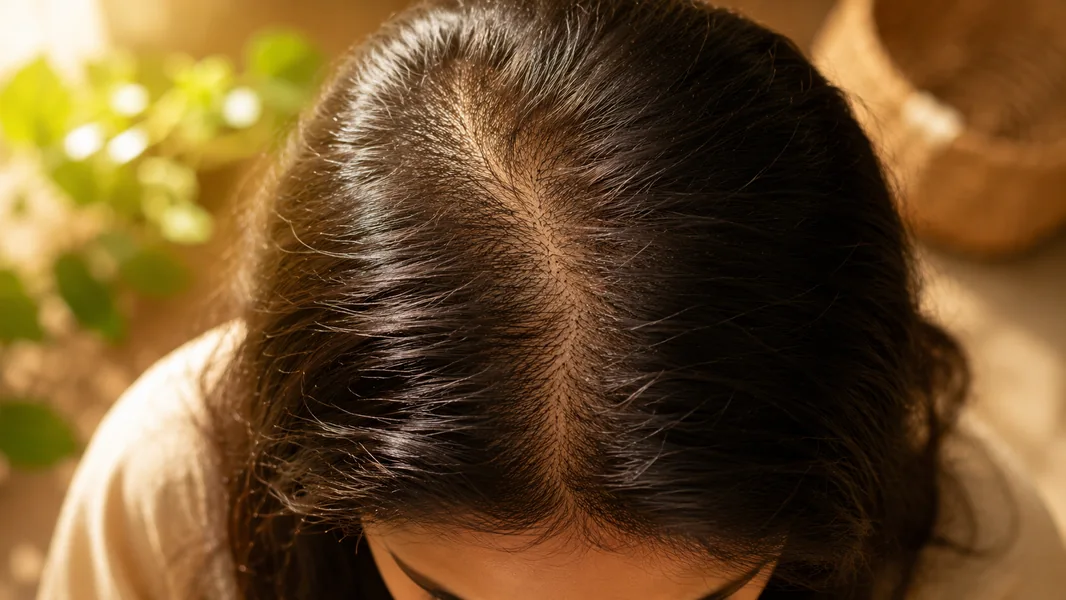
Alopecia areata causes smooth, round patches of hair loss that can appear suddenly on the scalp, beard, eyebrows or elsewhere. It can be frightening, especially in children and young adults, but understanding the condition helps. This guide explains what alopecia areata is, how it behaves, which conditions to check for, the treatments dermatologists use, how to cope, and where homoeopathic care fits.
Alopecia areata is an autoimmune condition: the immune system attacks hair follicles and pushes them into a resting state. The follicles are not destroyed, which is why hair can grow back. The typical sign is a smooth, round or oval bald patch with normal-looking skin. Short broken "exclamation-mark" hairs may be seen at the edges, and some people have small pits in their nails.
It can start at any age, often in childhood or early adult life, and affects about 2% of people at some point. It is more common in people with a personal or family history of autoimmune conditions or allergies. Stress or illness sometimes comes before a patch, but these are triggers rather than the root cause.
The course is unpredictable. Some patches regrow on their own, others spread, and new patches can appear even as old ones regrow. Regrowing hair is sometimes white or fine at first. Extensive loss, ophiasis, onset in childhood and nail changes are associated with a more persistent course.
Alopecia areata is linked with thyroid disease, vitiligo, and eczema or other allergies. Your doctor may advise a thyroid test and other checks depending on your symptoms.
A dermatologist may offer steroid injections into small patches, steroid creams or lotions, minoxidil, topical immunotherapy for extensive loss, or newer tablets (JAK inhibitors) for severe cases where available. Each has benefits and side effects that your dermatologist will discuss. These treatments continue as advised; homoeopathic care does not replace them.
Hair loss is one of the conditions for which homoeopathy is offered only as supportive care. In the consultation Dr. Meenakshi looks at how the patches started and changed, triggers, other autoimmune or allergic conditions, family history, sleep, stress and emotional wellbeing, along with your reports. Care is individualised alongside your dermatologist's treatment. No regrowth is promised, and progress is reviewed honestly at each follow-up. More: alopecia areata — clinic page.
Book a consultation and bring photos showing how the patches have changed, along with any reports.